

Are plants intelligent?
The answer may depend on who is asking the question

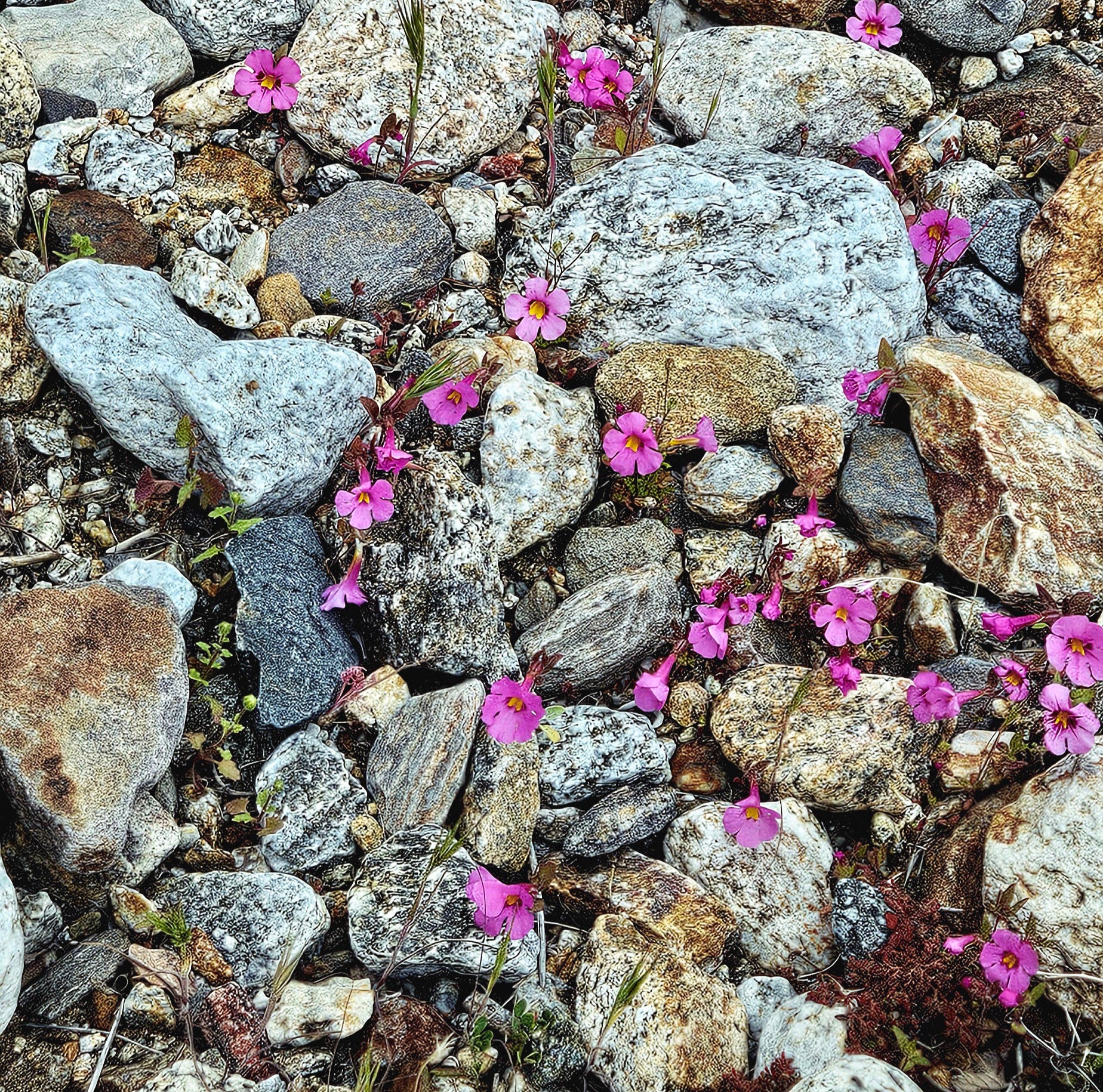
Are plants intelligent? The argument in favors almost always goes like this: Plants can communicate with each other and with other organisms, can warn their neighbors about herbivores, they can sense touch, sound, and visual signals, they have memory, can count, send electrical signals throughout their bodies, they recognize relatives, have personalities, and are capable of amazing change in response to changes in their environment. Doesn’t this prove that they are indeed intelligent?
What plants can do
Before we jump with both feet into that conclusion, let’s first consider this amazing list of what plants can do. One thing that the many compilers of such lists never mention is that no plant has ever been shown to have all these amazing capabilities. Each ability was found for one, or at most a few, plant species. Sure, that is because most plant species have never been studied to see what they can do. But we would never lump all animals together into a list of what animals can do. Even within the animal kingdom, we would probably not compile a list of what birds can do or mammals. Instead, we might make a list of what blue tits can do, or rats, or octopuses. So, why are we lumping all plants together instead of talking about what a Scots pine tree can do, a dandelion, or a maidenhair fern? The reason is clear; those would be much shorter lists and much less impressive.
The first compiler of such a list was the Scottish botanist Anthony Trevawas, who in 2003 published a review entitled Aspects of plant intelligence.[i] Like most enthusiastic list compilers after him, he did name all the plant species in which aspects of intelligent behavior had been found, but then still lumped them all together to make his argument in the form of this question: “If intelligent behavior is an accurate description of what plants are capable of, then why not use the term?” He was also the first to ask this crucial question: “Does it matter whether intelligence is used to describe plant behavior?” Good question! Does it matter, to whom, and why?
Let me back up a bit at this point to trace a bit of science history that led up to this question. From the early beginnings of science up to the 1980s, botany had been a distinct discipline from zoology, the study of animals, and microbiology, the study of bacteria and other microbes. There was almost no crossover between these biological disciplines, and they each had their own terminology, their own journals, and their own ways of doing things. Universities had departments of botany, zoology, and microbiology, and incoming biology students took separate courses with these titles. Animals could move, had behavior, and communicated. Plants supposedly could do none of those things.
Biological science slowly started to change around the 1980s. Publications about plants began to appear that questioned these artificial separations, such as A framework for plant behavior by Silvertown and Gordon in 1989[ii] and Root communication in desert shrubs by Mahall and Callaway in 1991.[iii] (Full disclosure: Bruce Mahall was my PhD adviser.) I contributed to that trend by co-authoring a review in 1999 with Mahall and Callaway where we asked whether plants could be territorial like animals.[iv] It made sense for someone to ask soon after if plants could be thought to be intelligent. There were good reasons for asking such questions: There were established methods and terminology to study behavior and communication in animals. Could these be useful for studying and understanding plants? I thought so when I co-authored a review about plant communication in 2010.[v] So why shouldn’t the same be true for intelligence? Or even consciousness?
Defining intelligence
There is one important difference between intelligence versus behavior and communication: Behavior and communication are relatively easy to define, although it is not in the nature of scientists to ever agree on one definition. But there is broad agreement about these concepts, and they clearly apply to plants and, in fact, to all kinds of organisms. It is practical and useful to use the same toolkits and terminology for studying behavior and communication in all living organisms. That is not true for intelligence, never mind consciousness. There are no agreed-upon tools and measures to study these things in all organisms. There are tools and measures that can be applied to humans and some animals, such as apes, but hardly anything that would be useful to apply to brainless organisms like plants, fungi, and bacteria.
One thing that explains some of the current rush towards declaring plants intelligent is the long history of low expectations. It is not that long ago that most botanists thought of plants as being unable to communicate, perceive their environment, make decisions, and solve problems. Abilities such as a bean seedling being able to directly locate a pole to grow up on instead of randomly searching for support or to locate nutrients with their roots growing in a maze seem amazingly intelligent to someone who assumed that plants could not possibly do such things.[vi] Yet, those are tasks that simple robots can do, using visual or chemical sensors, and are not signs of intelligence, as it is usually defined.
Wouldn’t it be best to define intelligence first and then decide if it applies to plants and other organisms? Sure, but there are dozens of definitions in the intelligence literature, including some that might apply to non-humans and many that do not. Suzanne Simard in her book Finding the Mother Tree took the lazy way out and just used the etymology of the word intelligence to decide if plants and fungi were intelligent. She writes (italics are hers):
It was already accepted widely that plants use their neural-like physiology to perceive their environment. Their leaves, stems, and roots sense and comprehend their environment, … The fungal hyphae, too, perceive their environment …
The Latin word intelligere means to comprehend or perceive.
Intelligence.[vii]
If we use etymology to define terms then we must conclude that ecology means the study of houses, because eco- comes from the Greek oikos, which means house. Or take the word conscious, which consists of the Latin con = with and Latin scire = to know. Does that mean that conscious means to know with something? It is often fun to learn about etymology, but it is useless for defining words, and scientists like Simard should know better than to attempt that. Whatever we do to arrive at a definition for intelligence, there is none that is universally accepted.[viii]
So, if there is no universal definition, what do we gain by ascribing intelligence to plants? Some cynics say that the scientists proposing this gain attention. It is hard to disagree with that, and it explains some of the backlash against these scientists. They in response protest that searching for aspects of intelligence in plants motivates a new research agenda that already has resulted in some amazing insights into plants. It certainly has done that, as documented in Zoë Schlanger’s book The Light Eaters. No scientist would argue that we should not ask questions, but scientific questions do not require labels like ‘plant intelligence’.
If you are interested in tracing the spirited debate between proponents and opponents of plant intelligence I suggest you read The Light Eaters, chapter 1 in Michael Pollan’s A World Appears, and the publications cited in the endnote below.[ix] The debate has descended sometimes into a shouting match, and things have been getting personal. Plant intelligence proponents are accused of being anthropomorphic, while opponents are accused of being anthropocentric. There are accusations of sexism targeting scientists like Suzanne Simard and Monica Gagliano, and I do not doubt that some of these accusations are not far off the mark. It is a bit of a mess, sometimes upsetting, and doubtlessly entertaining to some people in a gossipy way.
It is not a scientific question
I am not the only one who concludes that doing plant science is not helped in any way by labelling plants as intelligent. That label does not answer any scientific question, and it is not required for asking questions and doing experiments into what plants can do. It is not helpful for plant science except for scientists getting attention, but could there be some other reason to still use this label?
The answer is yes! As Zoë Schlanger writes in the final chapter of the Light Eaters:
At the end of the day, whether or not plants are intelligent is a social question, not a scientific one. Science will continue to find that plants are doing more than we’d imagined. But then the rest of us will have to look at the data and come to our own conclusions. How will we interpret this new knowledge? How will we fit in into our beliefs about life on earth?[x]
Writers from Anthony Trewavas in 2003 to Michael Pollan in 2026 have come to the same conclusion. How we view plants will profoundly affect our connection to them. And that is why this is a central topic here on The Plant Connection. Do you respect plants more if you call them intelligent? Can you appreciate them for the amazing beings that they are without using that label? It is up to you and each of us. I do not need that label; I am and have been in awe of plants for a very long time. They are so profoundly different from us. If calling them intelligent helps you to humanize and value plants then by all means go ahead and do it. Just do not expect most scientists to go along with that. Schlanger is right: It is not a scientific question; it is a social one.
[i] Trewavas, A. 2003. Aspects of plant intelligence. Annals of Botany 92:1-20.
[ii] Silvertown, J., and D. M. Gordon. 1989. A framework for plant behavior. Annual Review of Ecology and Systematics 20:349-366.
[iii] Mahall, B. E., and R. M. Callaway. 1991. Root communication among desert shrubs. Proceedings of the National Academy of Sciences (USA) 88:874-876.
[iv] Schenk, H. J., R. M. Callaway, and B. E. Mahall. 1999. Spatial root segregation: Are plants territorial? Advances in Ecological Research 28:145-180.
[v] Schenk, H. J., and E. W. Seabloom. 2010. Evolutionary ecology of plant signals and toxins: a conceptual framework. Pages 1-19 in V. Ninkovic and F. Baluška, editors. Plant communication from an ecological perspective. Springer-Verlag, Berlin.
[vi] See the videos showing these abilities on the web site for Michael Pollan’s book A World Appears at https://michaelpollan.com/consciousness/
[vii] Page 230. Simard, S. 2021. Finding the mother tree: Discovering the wisdom of the forest. Alfred A. Knopf, New York.
[viii] Gignac, G. E., and E. T. Szodorai. 2024. Defining intelligence: Bridging the gap between human and artificial perspectives. Intelligence 104:101832.
[ix] Here is a sample of the voluminous literature pro and con plant intelligence and plant consciousness
Alpi, A., N. Amrhein, A. Bertl, M. R. Blatt, E. Blumwald, F. Cervone, J. Dainty, M. I. De Michelis, E. Epstein, A. W. Galston, M. H. Goldsmith, C. Hawes, R. Hell, A. Hetherington, H. Hofte, G. Juergens, C. J. Leaver, A. Moroni, A. Murphy, K. Oparka, P. Perata, H. Quader, T. Rausch, C. Ritzenthaler, A. Rivetta, D. G. Robinson, D. Sanders, B. Scheres, K. Schumacher, H. Sentenac, C. L. Slayman, C. Soave, C. Somerville, L. Taiz, G. Thiel, and R. Wagner. 2007. Plant neurobiology: no brain, no gain? Trends in Plant Science 12:135-136.
Brenner, E. D., R. Stahlberg, S. Mancuso, F. Baluška, and E. Van Volkenburgh. 2007. Response to Alpi et al.: Plant neurobiology: the gain is more than the name. Trends in Plant Science 12:285-286.
Calvo, P., M. Gagliano, G. M. Souza, and A. Trewavas. 2019. Plants are intelligent, here’s how. Annals of Botany 125:11-28.
Cvrčková, F., H. Lipavská, and V. Žárský. 2009. Plant intelligence: Why, why not or where? Plant Signaling & Behavior 4:394-399.
Firn, R. 2004. Plant intelligence: an alternative point of view. Annals of Botany 93:345-351.
Pollan, M. 2013. The intelligent plant. Pages 92-105 The New Yorker.
Taiz, L., D. Alkon, A. Draguhn, A. Murphy, M. Blatt, C. Hawes, G. Thiel, and D. G. Robinson. 2019. Plants neither possess nor require consciousness. Trends in Plant Science 24:677-687.
Trewavas, A. 2004. Aspects of plant intelligence: an answer to Firn. Annals of Botany 93:353-357.
Trewavas, A., F. Baluška, S. Mancuso, and P. Calvo. 2020. Consciousness facilitates plant behavior. Trends in Plant Science 25:216-217.
[x] Page 244. Schlanger, Z. 2024. The light eaters: How the unseen world of plant intelligence offers a new understanding of life on earth. Harper, New York.
Thank you for the references! That explains a lot. When I was a postdoc in chemistry I was studying quinones released by the roots of sorghum. We tried to submit a research proposal, arguing that quinones were chemically somewhat similar to neurotransmitters and it would be interesting to look at their chemistry. Half of the reviewers were overly enthusiastic, while the second half was basically yelling at us.
I am not surprised to hear that story. When I wrote that nobody stops scientists from asking questions I left out that some peer reviewers very much wish to stop some questions from to be asked. The subject of big egos in science is a whole n'other story. Did it completely stop the research?