

Rose hips in winter
This rose wants to tell you something (if you are a bird)

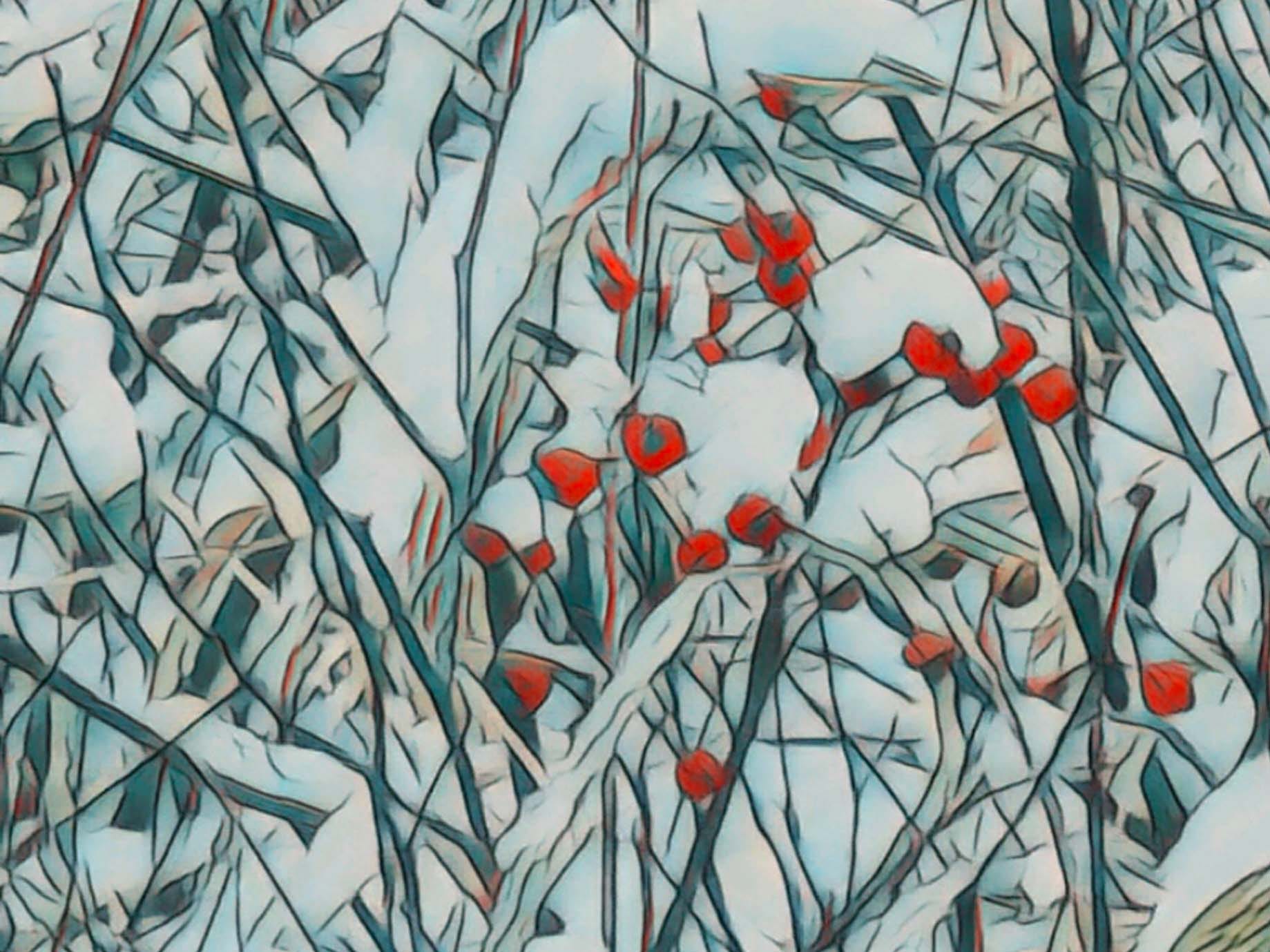
On a December walk in the Great Swamp in New Jersey with old friends, bright-red rose hips shone like holiday decorations from branches in the black and white winter landscape. Swamp roses in the swampiest part of the swamp. These roses are trying to tell us something, I thought. But what are they saying? It appeared like the message was “look, lots of good food in the middle of winter with not much else around to eat.” But here they were, and clearly nobody was eating them. Who was the message for, and why did the roses put up such a show to send it?
A lot of people today are fascinated by the idea that plants can communicate with each other and with other organisms. Books have been written on the subject and have become bestsellers. A lot of that interest is about chemical signaling between plants or even electrical signaling, but if we want to start thinking about plants communicating it is much easier to talk about visual signaling first. Many plants put up such a show with flowers and fruits, it is obvious that they are sending messages to anyone who can see.
It won’t surprise anybody that these messages are addressed to us animals to attract pollinators and fruit eaters to help with plant reproduction. Of course, the messages are not just for any animal. Much like a sexy outfit worn by a human is not meant to get the attention from just anybody, the visual plant messages are intended only for the kinds of animals that can actually help the plants’ reproduction. But wait a minute: Do plants have intentions?
We hit a common snag when talking about communication in organisms that are not human. Do they have intentions, and how can we possibly know? There are a few cases when we do know. When your dog sits at the front door with the leash in its mouth, making squeaky noises at you, you know exactly what its intentions are. For most animals in most situations, we can never know if they have intentions and what those may be. For plants, that is completely impossible to know. Intention is an important concept for human communication, but it does not help us understand communication in plants and other organisms.[i]
So, biologists replaced the concept of intention with another one, and that is benefit. For example, is the plant getting a benefit from sending a signal to another organism, including another plant? For biologists, benefit nearly always means a benefit for survival and reproduction. Will sending the signal increase the plant’s chances of surviving longer to produce more seeds and have more seedlings grow up to be adult plants?[ii]
This idea of signaling providing a benefit to the sender is common to all kinds of biological communication, including visual, chemical, electric, touch, and acoustic signaling. I plan to write about some of these cool ways in which plants communicate later on The Plant Connection, but let’s first stick to our simple example of rose hips in winter. What is the benefit for a rose bush that entices it to put up a bright-red holiday show in the middle of December?
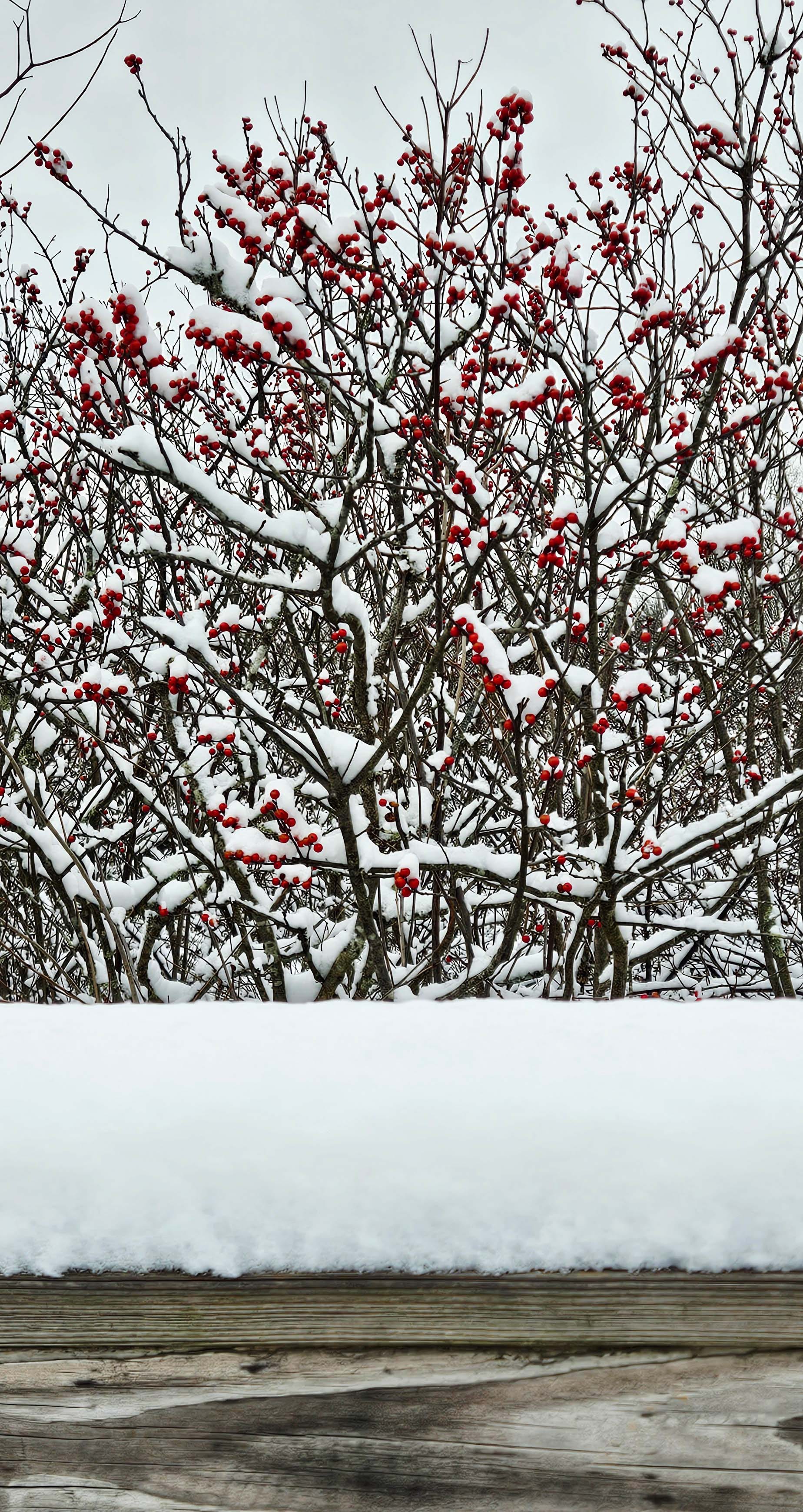
First of all, who is the message for? It can be seen by any animal that can see red, but that includes a lot of species. We humans see red, and we consume rose hips, but not in a way that benefits the rose. Making rose hip tea, jam, or jelly is hardly conducive to rose reproduction. Many birds consume rose hips, including thrushes, finches, blackbirds, waxwing, cardinals, robins, starlings, hawfinches, blue tits, and wood pigeons. Many—but not all—of these are winter residents and do not migrate. Some of these go for the seeds, others for the fleshy parts, and yet others for insect larvae inside the hips. Some rodents also eat rose hips, such as wood mice and bank voles.[iii]
Rose seeds generally germinate better after passing through an animal’s intestine, which partially digests the seed coat and makes it more porous.[iv] Also, animals move seeds around and allow them to go places. Birds are the best for helping the rose to get to all kinds of places over quite long distances. So, the swamp rose in my photos may well have traveled by bird from another swamp. Oh, the places you’ll go!, you may recite to the rose hips of the Great Swamp.
But here they are in December in the snow, and no birds appear to be interested in eating them and giving their seeds a ride to another swamp. In fact, it is well known that birds tend to consume rose hips only late in winter. In December, the fruits are bright red, but still hard and very bitter[v]. Rose hips ripen and become softer and more edible after frost. They may even start to ferment and accumulate alcohol, up to 0.32% of their weight in January.[vi] Not enough to give a buzz to the waxwings that feed on them, but perhaps adding an attractive kick to the meal.
But back to communication, what is the point of the rose giving a bright red signal to birds in winter that they have fruits, when these fruits are essentially inedible? We enter the realm of speculation, or hypotheses, as the scientist in me might prefer to say. Perhaps it would be a problem for rose seeds to pass through a bird’s intestine too early in winter when there remains a long cold period before conditions are good for germination. Also, perhaps ripening late in winter increases the chances of seeds getting a long-distance ride inside a bird during spring migration.
So, what is a rose to do if it needs its fruits to be consumed as late in the winter as possible? First, make the fruits as hard and bitter as possible for as long as possible. Second, make sure that they are easy to find for a starving bird late in winter with few other options to go for. Did I get the rose’s intention right? Of course, not, plants do not have intentions. But that’s my hypothesis to explain the bright red holiday decorations in the Great Swamp in winter, and I am sticking to it.[vii]
[i] For more on the distinction between human communication and plant communication, see Schenk, H. J., and E. W. Seabloom. 2010. Evolutionary ecology of plant signals and toxins: a conceptual framework. Pages 1-19 in V. Ninkovic and F. Baluška, editors. Plant communication from an ecological perspective. Springer-Verlag, Berlin. I’ll be happy to provide a pdf of this to anyone who would like to read it.
[ii] This benefit of surviving longer to produce more offspring is known to biologists as fitness, and it is the key to Darwin’s theory of natural selection. However, the word fitness has a completely different meaning to most regular people, and I prefer not to use it when writing for a general audience.
[iii] Hernández, Á. 2008. Fruit removal by climbing rodents in guelder rose: Comparison with birds and differences between inner and outer racemes. Mammalian Biology 73:472-477.
[iv] This is known as seed scarification and is often mimicked by gardeners using chemical or mechanical treatments to improve seed germination.
[v] Birds differ in their dislike for bitter tastes. Much like humans, some birds change from first disliking bitter taste to later liking it. It is unclear if the bitter taste of unripe rose hips is a deterrent for birds, but the fruits’ hardness surely is. More on bird taste can be found in this article: Niknafs, S., M. Navarro, E. R. Schneider, and E. Roura. 2023. The avian taste system. Frontiers in Physiology 14:1235377.
[vi] Eriksson, K., and H. Nummi. 1983. Alcohol accumulation from ingested berries and alcohol metabolism in passerine birds. Ornis Fennica 60:2-9.
[vii] Many thanks to Claus Holzapfel for fact-checking the bird facts for this post.
First of all, I love the art you made with your image in photoshop. Really beautiful. Secondly, how do you know how much alcohol it takes to give a waxwing a buzz?
Here in the west, many of the rose hips are totally unpalatable (to us), no matter the ripeness. They just taste like wax. This past weekend we finally found some that were ripe and sweet/sour on a ranch high in the transition zone. They were swarming with birds. Dark eyed juncoes I believe, though I am not a bird person.