

How do plants move water?
A time traveler’s journey to Heidelberg in the year 1894

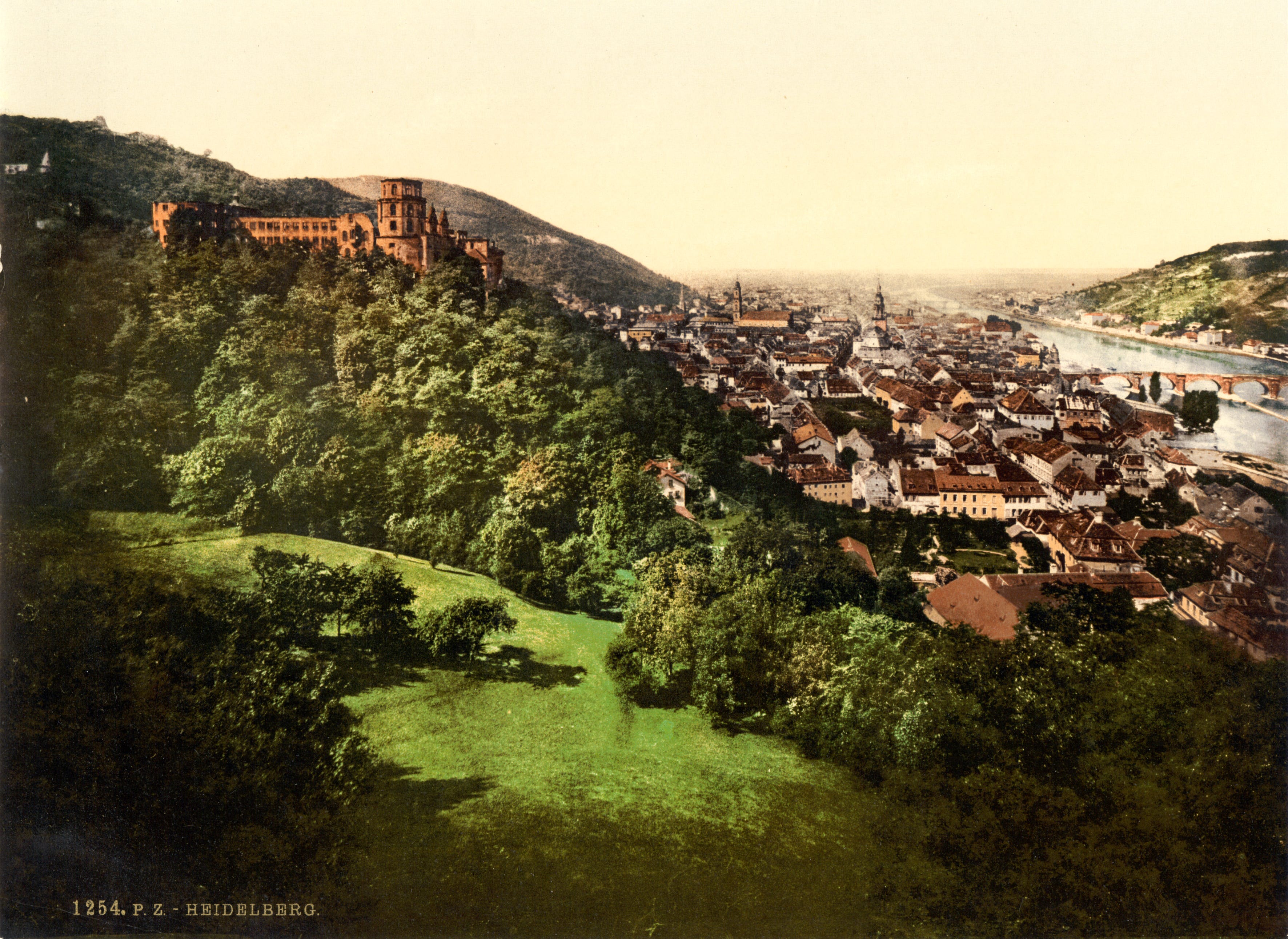
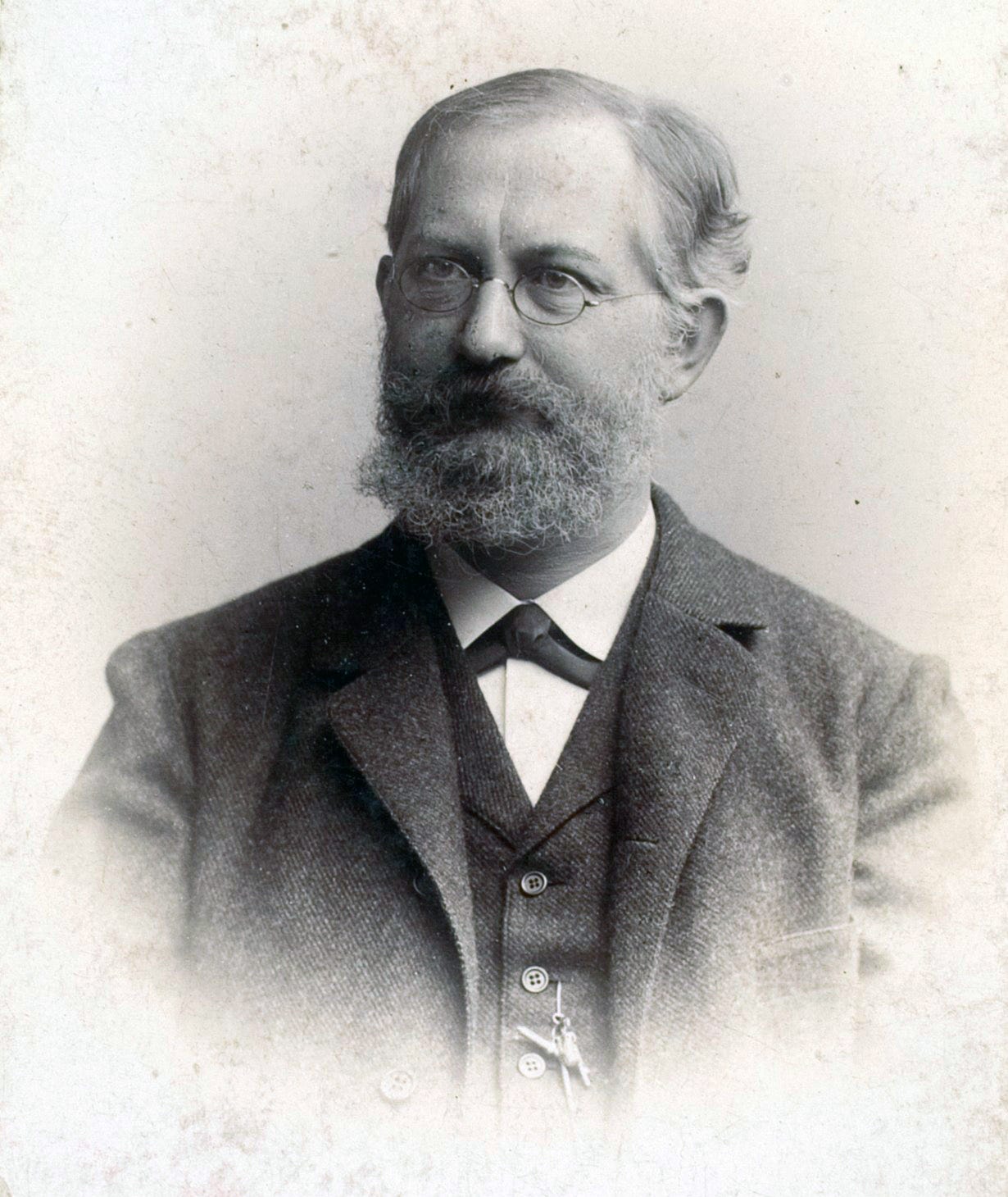
On a December morning in 1894, the time traveler found himself on the cobblestoned streets of the beautiful city of Heidelberg, seat of Germany’s oldest university. He had left his card with the housekeeper at Professor Eugen Askenasy’s home near the center of the town. Returning the next day, he was told that the professor would have time for him on Friday morning. He arrived punctually that day and was led up the stairs to a spacious living room with a writing desk in a corner near the windows, where the professor was already waiting for him. He was a tall man with a full beard and glasses, standing next to the desk, and he greeted the time traveler with a ready smile. Studying the time traveler’s card, the professor asked to what he owed the pleasure of this visit.
Time travelers must be ready with answers to such questions, each time and occasion requiring a different response, most certainly not the truth. The time traveler therefore introduced himself as someone with a private interest in botany who had come to consult the professor about some current issues that were hotly debated among botanists of the day. He had prepared himself to lead up slowly to the subject about which he had come to inquire, knowing that Professor Askenasy had not published anything about it yet.
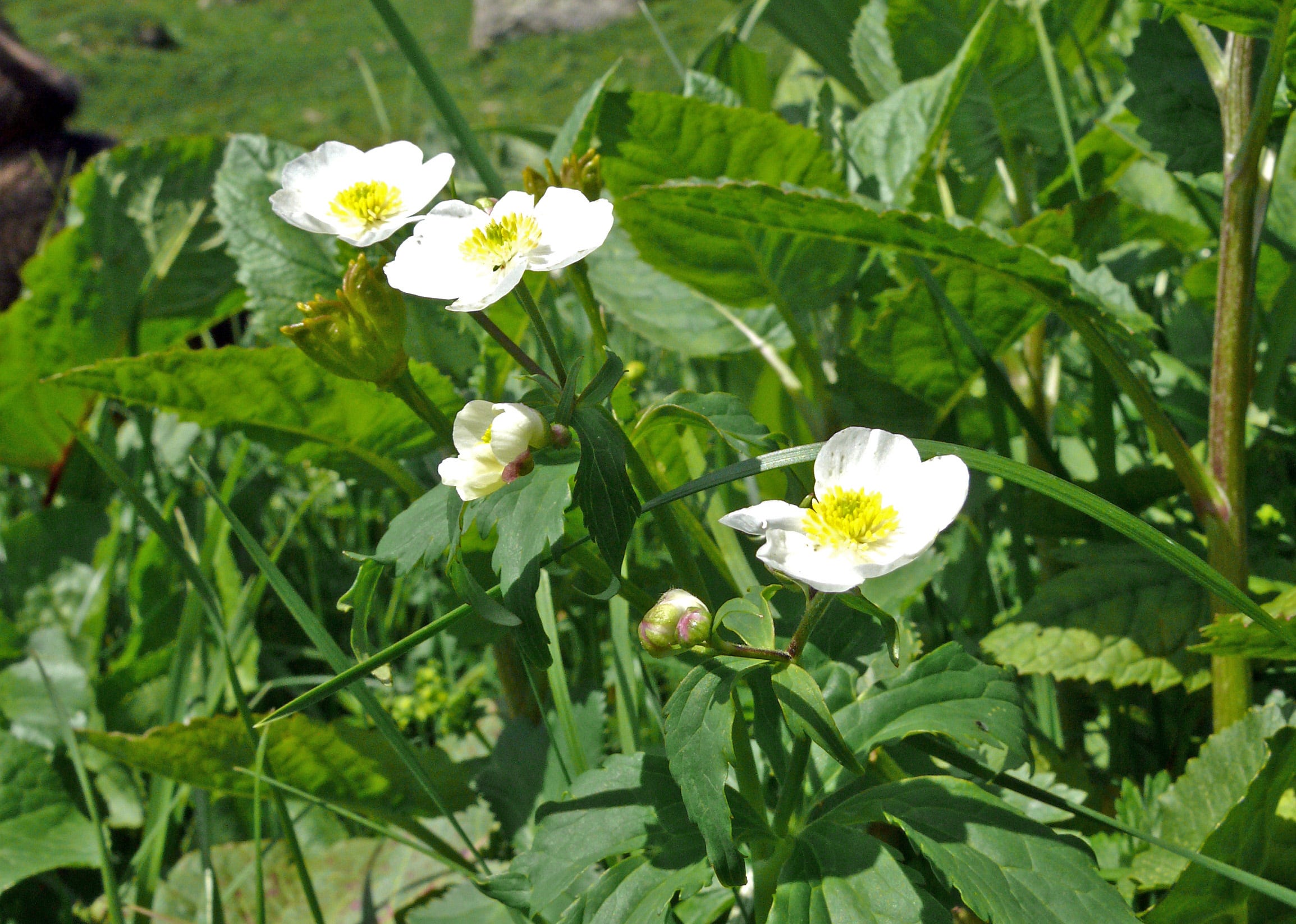
The professor was known as an expert in the flora surrounding Heidelberg; in fact, he taught plant identification and taxonomy to students at Heidelberg University and led popular excursions to explore the flora of the area. The time traveler therefore produced a dried plant specimen from the pages of a book and said that he had found this plant while walking near the city and was unsure what it was. “It looks like a buttercup,” he said, “but all species of Ranunculus that I know have yellow flowers, only the ones in water have white ones. But this species grew on land and had white flowers.” The professor smiled. “This is a rare find in these parts,” he said, “but it is indeed a buttercup, Ranunculus aconitifolius, the Aconite-Leaf Buttercup to be exact. You must have found this behind the Haarlass Hotel close to the river Neckar, which is the only place it grows around here.” “Yes, that is true,” proclaimed the time traveler, “I am astonished that you can provide both the species name and location.”
Having established his botanical bona fide, the time traveler proceeded to ask about the professor’s research on the effects of temperature on plant growth, which had been published recently in the Berichte der Deutschen Botanischen Gesellschaft. Professor Askenasy was delighted to talk about that subject and offered a seat to his visitor. “You will not mind if I stand,” he said, “my back suffers from too much sitting, which sadly limits my work with the microscope. But why don’t we have some tea while we talk.” He called for his housekeeper and ordered tea and small cakes.
The following half hour or so, the professor paced across the room while talking about temperature, light, and plant growth with great animation, while the time traveler sat on a hardback chair, sipped his tea, munched on the cakes, and mostly listened. After some time, he dared to approach the subject he had come to talk about. Moving on from the subject of growth to plant anatomy, he mentioned the recent publication by Professor Eduard Strasburger at Bonn University of a treatise about the structure and function of vascular systems in plants. Strasburger had found that plants could transport water to great heights even when all the living cells in their stems and leaves had been poisoned, concluding that only physical processes were required to move water up to the leaves. With these experiments, he had proved that living tissues were not involved in moving the water, and this had caused much controversy and debate.
Professor Askenasy responded with much animation to this change in subject and confessed that he had visited Strasburger in Bonn only recently after meeting him previously at a botanical congress. “Strasburger demonstrated his experiments to me, and I was impressed,” he said. “However, it struck me that he has no good explanations for his remarkable findings.” “How do you explain them?” asked the time traveler. He had come to ask this very question. Askenasy gave him a sideways glance. “Why do you ask me? I have not published on that subject,” he replied. “Oh, no particular reason,“ said the time traveler, “I just thought that it was no use asking Strasburger because he clearly does not know the answer. Perhaps you have your own explanation?”
“There are many who would like to explain the mechanism behind the ascent of sap in plants.” responded the professor. “In fact, Strasburger gets a lot of visitors who are interested in this subject. He told me that recently two scientists came all the way from Dublin to discuss these questions. I have my own theories, but I would like to conduct some experiments before I say anything about them.”
At this point, the housekeeper knocked and then came in with a fresh pot of tea and the mail. While she refilled the cups, the professor glanced through his letters and noticed a small package. “The latest issue of the Proceedings of the Royal Society of London,” he exclaimed, opening the package. “That often makes for interesting reading.” He leafed through the table of contents. Suddenly, his face fell. “On the ascent of sap,” he read out loud, “by Henry H. Dixon, B.A., Assistant to the Professor of Botany, Trinity College of Dublin, and J. Joly, M.A., Sc.D., F.R.S.[i] Could that be the two Irishmen who visited Strasburger in Bonn? Will you excuse me while I take a quick look at this? It is only an abstract of two pages.”
The time traveler silently cursed himself for having arrived on the very day when Askenasy saw that abstract. He had meant to arrive before to find out Askenasy’s own thoughts about the ascent of sap in plants before he read that abstract. But now it was too late; the professor was reading with mounting agitation. Having finished, he slowly read it again, and then softly set down the journal on the table and took a sip of tea. “They beat me to it,” he said. “Those Irishmen arrived at the same conclusions as I did after visiting Strasburger.” With a low chuckle he added “And I bet they did not tell Strasburger what they thought. Just like I did not. I meant to do some experiments to test my ideas and then publish my explanation.”
The professor glanced at his visitor. “This is only a short abstract and quite incomplete. Perhaps if I told you my hypothesis, including what is not mentioned in this paper, you can be my witness that I arrived at this same explanation independently?” He looked hopefully at the time traveler, who was shifting uncomfortably in his seat. He could hardly be a witness in 1894 when he was only there for a brief visit from the future. But this information was what he had come for, so he agreed. One more lie means little to a time traveler. Lying is part of their occupation.
Professor Askenasy resumed his pacing around the room and began to explain his ideas about how the sap ascends in plants solely due to physical forces. “It is all here in the abstract by the two Irishmen,” he said, “but one crucial detail is missing. Namely the location of the force that pulls up the sap in the plant.” He looked again at the pages before him. “Some new experiments of the authors lead to the view that the ascent is principally in the lumen and not in the wall,” he quoted from the abstract, adding “The lumen here is that of vessels and tracheids, the conduits which transport the sap in plants. Professor Sachs had calculated that these conduits are too wide to allow for the sap to rise to the full height of a tree purely by capillary action. I studied with Sachs in Poppelsdorf and of course agree with him. But Sachs thought that water must rise through the capillaries in the walls of these conduits and that seems to be impossible. It would be much too slow. Strasburger suggested to me that the water was somehow moving along the conduit walls past bubbles of gas in the lumen. That appears equally impossible. No, it must be filling the whole lumen of the conduits and move that way, like water in a garden hose. But which force would move the sap all the way to the height of a tree if not a living force and not capillary rise?”
He looked at the time traveler, waiting for a response. His guest, of course, knew the answer, having read both Askenasy’s publication from the following year and also that of the two Irishmen, Dixon and Joly, which would come out later that next year. Sometimes being a time traveler can be uncomfortable, because it often means that you know too much. There had been a day when he had met President Lincoln on the way to the theater and had been unable to say anything. One false word, and the time-space continuum goes out of whack. It had been very tempting, but the code of time travelers does not allow it. It is just too dangerous. In this case it was easy. Show ignorance and let the professor explain. “If Strasburger cannot explain it, “he responded to Askenasy, “then I surely cannot. Please tell me your answer.”
“Let me read you something,” said the professor, then walked over to a writing desk near the window and rummaged through some journals that were piled on top. “Here, it is. It’s from Josef Böhm’s paper ‘Capillarity and the ascent of sap’ that came out last year.”
“Böhm writes: Compared to the length of a water thread that is theoretically possible due to cohesion, even the tallest tree on Earth would be an almost vanishingly small twig. Such water threads, hanging from the evaporating leaf cells, whose lower ends connect with the ground, are undoubtedly found in plants.”[ii]
“Did Josef Böhm then explained what force would pulls up these water threads?” asked the time traveler. “It seems to me that he must have found that force in the leaves.” Askenasy eagerly nodded, causing his glasses to slide down his nose. He pushed them back up.
“Yes, he locates the force in the leaves and thinks it is some sort of capillarity, but he does not explain that any further. One must not, however, say with Böhm that the water columns in the conducting pathways of plants are suspended from the walls of the leaf cells. Rather, adhesion takes place at all the walls bordering the conducting pathways, and this, together with the cohesion of the water particles, prevents the water columns from sinking.”
“So, then cohesion allows the water to be pulled up and adhesion to the walls of the conduits holds it in place. And the capillaries that provide the pulling force are somewhere in the leaves? Where are they?” asked the time traveler.
“The water evaporates at the outer surface of the cell wall, where this borders an intercellular space inside the leaf. It comes from the interior of the cell and passes into the cell wall. The tiny capillaries that provide the pulling force are in the cell walls of the leaves,” explained Askenasy, smiling broadly. He was evidently highly pleased with himself. He added “We must also consider the impermeability of the moist cell wall to air. If this were not present, then, given negative pressure inside the conducting pathways, air would immediately be drawn in from outside, and thereby the adhesion of the water to the walls would be abolished.”
“Have the two Irishmen, Dixon and Joly, come to the same conclusion?” inquired the time traveler. “I believe so, but they are not saying so directly in this brief abstract. Let me see, they write that ‘evaporation at capillary water-surfaces is mainly responsible for the elevation of sap’, but they do not say that these surfaces are in the cell walls of the leaves,” responded Askenasy.
He suddenly looked up from the page he was reading and directed a hopeful glance at the time traveler. “Do you think I could still publish my explanation in a full article and get credit for my ideas? Perhaps I could even publish it more quickly than the full publication from the two Irishmen, which is sure to follow their abstract.”
“You should do that!” exclaimed the time traveler. He knew well that he could never change the course of history by giving advice to someone in the past. But he knew that Askenasy would publish such a paper in the following year, and it seemed safe to advise something that would happen anyway. “You could easily justify not doing your own new experiments by pointing to all the experiments that Strasburger already did to show that living cells are not required for pulling up sap.”
“I thank you for your advice and good opinion,” exclaimed Askenasy. “I will start today. No, not today, because Shabat will soon commence. Then Sunday!”
With that, the time traveler took his leave and walked along the cobblestoned streets of beautiful Heidelberg across the bridge and up the hill on the Philosopher’s Path to the top of the Heiligenberg where he had parked his time machine.
A footnote from the author
It is convenient for anyone who writes about the history of science to have a time traveler on staff. I count myself lucky in that regard, although time traveling is a risky business. One must always be prepared for the time traveler to do or say something that will change the course of history. Did anything the time traveler said to Eugen Askenasy change that man’s thoughts or did it change the content of his paper, duly published in 1895?[iii] We will never know because if history was changed then we are living in it and wouldn’t realize the change.
Some new readers may not know that I have a time traveler on staff because the risk involved with sending him to the past means that I engage his services only rarely. In fact, one time he got into an altercation with the scientist John Woodward in the late 17th Century, which could have led to a major redirection of history, and perhaps it even did. You can read all about that at this link: https://theplantconnection.substack.com/p/what-transpired.
Or check out the time traveler’s conversations with the Medieval polymath Avempace (https://theplantconnection.substack.com/p/the-power-of-the-sun-a-visit-with) and the Roman poet Lucretius (https://theplantconnection.substack.com/p/where-do-plants-come-from). Note that I was still excited about AI when I wrote these posts, and back then used AI images as illustrations. I stopped doing that some time ago to make it very clear to my readers that AI is never used for writing and creating posts and notes on The Plant Connection.
If someone questions my reliance on a time traveler as a source of information about history, rest assured that I check everything he tells me against sources. There are lots of sources about the history of science about the ascent of sap in plants, and some are cited in the endnote below.[iv]
If you appreciate my work and want to support it please consider a small one-time donation via the ‘Buy me a Book’ button below. I read a lot of books for this Substack, and some independent bookstore near me will benefit from your donation. Thank you!
MUSICAL CODA
[i] Dixon, H. H., and J. Joly. 1894. On the ascent of sap. Proceedings of the Royal Society of London 57:3-5.
[ii] Böhm, J. 1893. Capillarität und Saftsteigen. Berichte der Deutschen Botanischen Gesellschaft 11:203-212.
[iii] Askenasy, E. 1895. Ueber das Saftsteigen. Verhandlungen des Naturhistorisch-medizinischen Vereins zu Heidelberg, N.F. 5:325-345.
[iv] The history of the research done by Strasburger, Böhm, Askenasy, Dixon, Joly, and others in the 19th Century is reviewed in: Brown, H. R. 2013. The theory of the rise of sap in trees: Some historical and conceptual remarks. Physics in Perspective 15:320-358.
There are two biographical accounts of Eugen Askenasy, both from people who knew him well:
Bütschli, D. 1935. Eugen Askenasy. Pages 70-74 in U. Krieger and R. Obser, editors. Badische Biographien. VI. Teil. 1901-1910. Carl Winters Universitatsbuchhandlung, Heidelberg.
Möbius, D. 1903. Eugen Askenasy. Berichte der Deutschen Botanischen Gesellschaft 21:47-66.
Original sources used for this story include the following:
Strasburger, E. 1891. Ueber den Bau und die Verrichtungen der Leitungsbahnen in den Pflanzen. Histologische Beiträge III:1-1000.
Strasburger, E. 1893. Ueber das Saftsteigen. Histologische Beiträge V:1-94.
Askenasy, E. 1896. Beiträge zur Erklärung des Saftsteigens. Verhandlungen des Naturhistorisch-medizinischen Vereins zu Heidelberg, N.F. 6:429-448.
Askenasy, E. 1900. Kapillaritätsversuche an einem System dünner Platten. Verhandlungen des Naturhistorisch-medizinischen Vereins zu Heidelberg, N.F. 6:381-411.
Dixon, H. H., and J. Joly. 1895. On the ascent of sap. Philosophical Transactions of the Royal Society of London, Series B 186:563-576.
Dixon, H. H., and J. Joly. 1895. The path of the transpiration-current. Annals of Botany 9:403-420.
I think you might find the answer in this book: The Pity of It All: A Portrait of the German-Jewish Epoch, 1743-1933 by Amos Elon (2003) Picador. In the period, German society was uncomfortable with assimilated Jews, to say the least.
Thank you for this, and the subtle reference to Askenasi’s Jewish heritage.