

Lying plants
How are they getting away with it?

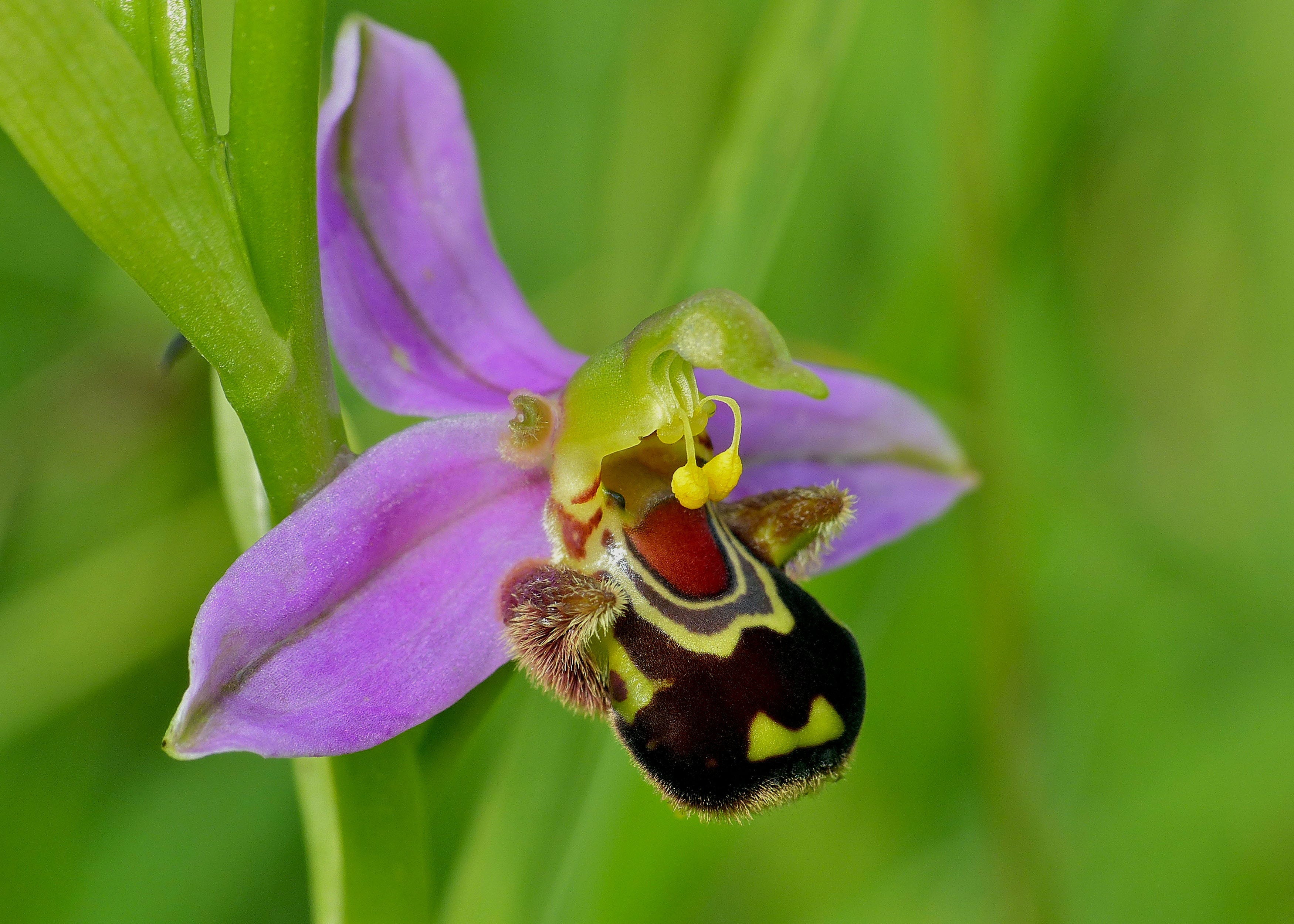
This post marks the one-year anniversary of this Substack, which I first published under the name River to the Sky and later renamed to The Plant Connection. I loved that first title and wrote a song about it, but the current title is a much better descriptor. I began writing this Substack while living on Lido di Venezia, an island that creates the border between the Venetian lagoon and the Adriatic Sea. I am back here one year later, and I want to dedicate this post in gratitude to my landlady Stefania and her daughter Silvia for letting me stay in this beautiful place, which has become a second home.
Silvia is a philosophy professor, and I have been writing surrounded by her philosophy books. Plato, Kant, Hume, Wittgenstein, Nietzsche, and many others look down at me from the bookshelves while I write, and this can be a bit intimidating. But also, very inspiring! There is a short monograph on the shelf by the philosopher Elizabeth Anscombe entitled Intention[i], which caught my eye while reading about claims that plants have intentions. So, I thought that in honor of the one-year anniversary and in gratitude for this room where I am privileged to write, I would philosophize a bit about plants and their intentions.
False promises about sex
Imagine, if you will, a plant that is lying and getting away with it. Lying, you say? Isn’t a lie an intentional falsehood? If the plant is lying, am I saying that plants have intentions? Well, what I have in mind is an elaborate lie, one that takes a lot of effort and commitment. A con job. Wouldn’t that have to be intentional? I wonder what the philosopher Plato would have to say about it. He not being available[ii], let’s examine the evidence.
Lots of flowering plants send visual and chemical signals to pollinators promising them rich reward for visiting their flowers, pollen, nectar, and sometimes other things as well. But some plants are lying. They take advantage of the fact that most flowers provide pollen and often nectar and that pollinating insects can’t always tell which flowers do not. So, some cheaters get pollinated, sneaking in between all the others that are honest. Doesn’t that ring a bell for us humans? Many orchids are inveterate liars, for example sending visual and chemical cues that promise sex with a female to a male bee or wasp but then cheating the poor male into pollinating the orchid (see video). How do the orchids get away with that?
Video: Sneaky orchid tricks a wasp | The Green Planet | BBC Earth. Narrated by David Attenborough.
Cheating works as long as it is rare. If the vast majority of flowers offer food as rewards then a few cheaters can sneak in and reap the benefit of pollinators trusting the flowers’ signals. Pollinators like honeybees can also learn to recognize the cheating flowers that offer them nothing, which sets off an evolutionary arms race where the flowers evolve to become ever more convincing in their advertising and the pollinators become better at avoiding the cheaters without reward.
Some people have suggested that the male wasps like the ones visiting the orchid in the video do not mind being fooled by the orchids, may in fact enjoy their experiences with the dummy female, and seek out orchid flowers for a bit of fun. The shape of the flower that the males land on is usually close to the shape of a female wasp and the chemical volatiles from the flower closely mimic those from a female wasp. This inspired the thought that male wasps are using the orchid flower as a sex toy. This idea was first published in a feminist critique of neo-Darwinism by Carla Hustak and Natasha Myers in 2012[iii]. The authors questioned the hypothesis that only the orchid benefits from the encounter and wrote:
A neo-Darwinian economy, it seems, cannot admit pleasure, play, or improvisation within or among species.
We ask, What if the topology of insect/orchid encounters were conditioned not just by a calculating economy that aims to maximize fitness but also by an affective ecology shaped by pleasure, play, and experimental propositions?
As cool as it is, the idea that the encounter of male wasps with orchid flowers is an affective ecology that is shaped by pleasure, play, and experimental propositions does nothing to explain why this encounter exists. The encounter may well be shaped by the interplay between the two species, but why does it exist? As a concept, I love the idea that anticapitalist orchids reject calculating economy and offer free sex toy services for other species, although it seems a bit sexist that they only offer this to the male wasps.
Handicap principle to the rescue
But back to biological science, how could this interaction between orchid and wasp or bee possibly evolve? In my previous post about Honest Plants I wrote about the handicap principle, which states that honest communication must be costly to be believed.[iv] A cheap signal that is easy to fake is not trustworthy, but one that requires a lot of effort and resources to make, or is costly in other ways, is more believable. Isn’t the orchid’s signal quite costly? The entire flower and a cocktail of chemicals are devoted to attracting specific male wasps. If this scheme does not work, then no other pollinator will come and pollinate the orchid. This is a high-cost proposition. Doesn’t this example refute the handicap principle?
No, quite the opposite! This elaborate con job supports the hypothesis that the orchid-wasp interaction evolved as the handicap principle would predict. It is true that honest communication must be costly, but it is therefore also true that a successful elaborate con job must be costly as well so that it will be believable. In his delightful book Truth: A brief history of total bullsh*t[v], Tom Phillips provides astonishing examples for costly con jobs in human society. One of the most extreme examples is that of Gregor MacGregor’s ‘Poyais’ scam, for which he invented a fictitious country in South America to lure paying emigrants from Scotland and England. He wrote guidebooks to that country, hired ships, and fooled hundreds of people to pay him to emigrate to the non-existing Republic of Poyais. They only found out their mistake when they arrived.
It turns out that honest communication and effective deceit both work by being costly. That suggests that the middle ground, a little half-truth, omission, or small lie here and there, is the least costly way to communicate. This generalization matches our everyday human experience. Most of us engage in little polite lies to avoid hurting someone’s feelings or omit some truth to ease human interactions. Is the same true for animals and plants? This being a philosophizing post, let’s mention that Immanuel Kant strongly disagreed with the argument that there are no costs associated with such benevolent lies.[vi] I will leave it to the philosophers to apply Kant’s categorical imperative to plant-insect interactions.
All this is not to say that the interaction between orchids and wasps must be completely one-sided and that only the orchid benefits from the deception. It may be that there is a hidden advantage to the wasps beyond the momentary pleasure that we are not yet aware of. Certainly, there does not appear to be much of a disadvantage, because the wasps keep falling for the con and it does not seem to hurt their populations.[vii] Perhaps the wasps’ fitness benefits somehow.
Believe it or not, a debate exists in biological science about the evolutionary advantages of masturbation, a common phenomenon across the animal kingdom, especially in mammals, but also some other groups.[viii] It has been proposed that male masturbation flushes out old and aging sperm or possibly pathogens. Perhaps improved sperm quality could benefit male wasps that visit orchid flowers?[ix]
The idea that interaction with orchids may also benefit the wasp may sound far-fetched, but this is a finely tuned coevolved system, and such systems often evolve with fitness benefits for both species involved. I’d like to remind you that when fungi were found to colonize tree roots it was long thought that the fungi were pathogens and were harming the trees. Turns out that both tree and fungus benefit from the association that we now call mycorrhizae. Coevolution does not imply benefit for both species, because predator-prey interactions also coevolve, but cooperative coevolution is very common indeed.[x]
Do plants have intentions?
I hope I have almost convinced you that some orchid species lie to male wasps or bees, but how can it be a lie without being intentional? Do plants have intentions? The philosopher Elizabeth Anscombe discussed the many context-dependent meanings of the word ‘intention’, and that discussion alone makes it clear how difficult it is to decide what is an intention. She proposed that there are four criteria for something to be called an intention. There must be a reason that can be given by the one who has the intention, a knowledge of what one is doing, a characterization of the intended action as desirable, and the action must be rational. This is a highly condensed summary of her arguments, but it suffices to show that none of these criteria can possibly apply to plants. Only humans can have intentions according to these criteria.
More recently, the invention of robots and AI have redirected the debate about the nature of intentions away from humans. The philosopher John Searle in his ‘Chinese room’ thought experiment argued that robots cannot possibly have intentions and that a brain is required for intentions.[xi] This could include animals having intentions but would appear to exclude plants. Wait a minute, some will say, hasn’t it been proposed that plants do have brains that are distributed and connected across the whole plant, instead of forming a single organ? Yes, that has indeed been proposed,[xii] but is highly debatable and perhaps a subject for a future post.
As you can see, the question of whether plants have intentions opens a big can of all kinds of worms. Some biologists have proposed a way around this debate by proposing that natural selection for maximized fitness can serve as the ‘intention’.[xiii] So, it becomes evolution’s ‘intention’, the technical term being teleonomy, rather than the plant’s intention. But that response does not satisfy the growing number of people who clamber for recognizing plants as intentional beings. One promising way to move forward in the debate about plant intentions may be to realize a continuum of intentionality[xiv], with plants at the weak end and humans at the strong end of the continuum.
I want to leave this discussion for now where I started, in my room in Lido di Venezia, surrounded by philosophy books. To me, it seems clear that the question of whether plants have intentions is philosophical, not scientific. Scientists cannot answer this question and should not be expected to do so. If you want to ascribe intentions to plants, go ahead, take a dive into the philosophical literature or perhaps consult your friendly neighborhood philosopher about what an intention is. Personally, I have every intention to do so.
MUSICAL CODA
It’s all a lie…
[i] Anscombe, G. E. M. 1957. Intention. Blackwell, Oxford.
[ii] Imagine if Plato were available to comment in the here and now! This possibility is the premise for Rebacca Newberger Goldstein’s wonderful book Plato at the Googleplex, which I highly recommend to you.
[iii] The term neo-Darwinism is generally used to describe any integration of Charles Darwin's theory of evolution by natural selection with Gregor Mendel's theory of genetics. Citation: Hustak, C., and N. Myers. 2012. Involutionary momentum: Affective ecologies and the sciences of plant/insect encounters. differences 23:74-118.
[iv] Zahavi, A., and A. Zahavi. 1997. The handicap principle: a missing piece of Darwin’s puzzle. Oxford University Press, New York, Oxford.
[v] Phillips, T. 2019. Truth: A brief history of total bullsh*t. Wildfire, London.
[vi] Kant, I.: 1898, On a supposed right to tell lies from benevolent motives. In: T.K. Abbott (trans.), Kant’s Critique of Practical Reason and Other Works on the Theory of Ethics. London: Longmans, Green and Co.
[vii] Armstrong, N. 2016. Do wasps just want to have fun? Darwin and the question of variation. differences 27:1-19.
[viii] Roth, L., P. Briken, and J. Fuss. 2023. Masturbation in the animal kingdom. The Journal of Sex Research 60:786-798.
[ix] Brunton Martin, A. L., J. C. O’Hanlon, and A. C. Gaskett. 2020. Orchid sexual deceit affects pollinator sperm transfer. Functional Ecology 34:1336-1344.
Gaskett, A. C., C. G. Winnick, and M. E. Herberstein. 2008. Orchid sexual deceit provokes ejaculation. The American Naturalist 171:E206-E212.
[x] Silvertown, J. 2024. Selfish genes to social beings: A cooperative history of life. Oxford University Press, Oxford, UK.
[xi] Searle, J. R. 1980. Minds, brains, and programs. Behavioral and Brain Sciences 3:417-424.
[xii] Brenner, E. D., R. Stahlberg, S. Mancuso, J. Vivanco, F. Baluška, and E. Van Volkenburgh. 2006. Plant neurobiology: an integrated view of plant signaling. Trends in Plant Science 11:413-419.
[xiii] Dresow, M., and A. C. Love. 2023. Teleonomy: Revisiting a proposed conceptual replacement for teleology. Biological Theory 18:101-113.
[xiv] Sims, M. 2021. A continuum of intentionality: linking the biogenic and anthropogenic approaches to cognition. Biology & Philosophy 36:51.
Every time I read about the interactions between plants and animals /plants and other plants (thinking particularly of fungi), I'm reminded of how much we have yet to discover! I think the clever orchid may well have intentions far beyond our comprehension.
I loved reading this, thank you for such a thought-provoking piece. I shall now be considering the intentions (however accidental) of all my plants!!
Ah, the orchids. The bee orchid grows in my garden and I feel so privileged.